LY3437943 is described in the literature as a triple agonist because a single peptide chain binds and activates three separate receptors: the glucagon-like peptide-1 receptor (GLP-1R), the glucose-dependent insulinotropic polypeptide receptor (GIPR) and the glucagon receptor (GCGR). That is an unusual property for a peptide hormone analog, since native GLP-1, native GIP and native glucagon each signal through their own dedicated receptor and do not meaningfully cross-activate the others. This article looks at what "triple agonist" means mechanistically, how one sequence can engage three related receptors, and what published pharmacology studies have measured at each of the three signaling nodes.
| Receptor | Gene / family | Primary second messenger | What studies use it to measure |
|---|---|---|---|
| GLP-1 receptor | GLP1R, class B1 (secretin-like) GPCR | Gs-coupled cAMP rise | Insulin secretagogue activity, gastric emptying, central appetite circuits |
| GIP receptor | GIPR, class B1 GPCR | Gs-coupled cAMP rise | Additive incretin signaling, adipocyte and beta-cell assays |
| Glucagon receptor | GCGR, class B1 GPCR | Gs-coupled cAMP rise, some Gq activity reported | Hepatic signaling, energy expenditure and lipid handling readouts |
What does "triple agonist" mean at the receptor level?
All three receptors that LY3437943 engages belong to the same structural class, class B1 G-protein-coupled receptors, which also includes the receptors for secretin, PTH and calcitonin. Class B1 receptors share a two-domain binding architecture: a large extracellular N-terminal domain that first captures the peptide hormone, followed by insertion of the peptide's N-terminus into a transmembrane helical bundle that triggers the conformational change driving G-protein coupling. Because GLP-1, GIP and glucagon are themselves structurally related peptide hormones with overlapping ancestry, their receptors share enough binding-pocket similarity that a single engineered peptide backbone can be tuned to satisfy all three, something a peptide targeting an unrelated receptor family could not do. Mayendraraj and colleagues reviewed how GLP-1R and GIPR signaling interact at the beta cell, describing the receptor overlap that multi-agonist peptide design exploits (Mayendraraj et al., 2022).
Why engineer three receptors into one molecule instead of one?
The rationale is laid out in detail in the review by Capozzi and colleagues, who trace the field's progression from single-receptor GLP-1 agonists to dual GLP-1/GIP agonists to triple agonists that add glucagon receptor activity (Capozzi et al., 2018). Each receptor contributes a distinct signaling axis in preclinical models. GLP-1 receptor activation is associated with glucose-dependent insulin release and delayed gastric emptying. GIP receptor activation is reported to add to the incretin effect on top of GLP-1 signaling. Glucagon receptor activation is the least intuitive addition, since glucagon classically raises hepatic glucose output, but the triagonist literature frames its contribution around energy expenditure and hepatic lipid handling in animal models, with the two incretin arms offsetting glucagon's effect on circulating glucose. Knerr and colleagues tested this logic directly, reporting that a GLP-1/GIP/glucagon triple agonist normalized body weight in diet-induced obese mice more effectively than dual-receptor comparators in their model (Knerr et al., 2022).
How is the receptor balance engineered rather than left to chance?
Coskun and colleagues, who published the primary discovery paper on LY3437943 (development code LY3437943), described the molecule's activity as deliberately unbalanced across the three receptors rather than equal: relatively strong GIP receptor potency, intermediate GLP-1 receptor potency and comparatively weaker glucagon receptor potency in their in vitro assays (Coskun et al., 2022). That ratio is a design parameter, not a byproduct. Shifting the balance between the three activities changes what the resulting molecule is useful for studying, which is part of why LY3437943 is not interchangeable with other multi-receptor agonists in the same structural family, including two-receptor comparators that omit the glucagon arm entirely. Background on how LY3437943's receptor profile compares with the dual-agonist LY3298176 and the single-receptor agonist NN9535 is covered in LY3437943 vs LY3298176 vs NN9535, and the fuller picture of the molecule's design history is in what is LY3437943.
What has been measured downstream of receptor binding?
Beyond the initial receptor-binding and cAMP assays, published studies have looked at physiological readouts downstream of the three signaling pathways. Urva and colleagues reported that LY3437943 delayed gastric emptying in a clinical pharmacology study, a readout consistent with GLP-1 receptor pharmacology acting through vagal and central pathways (Urva et al., 2023). That finding matters for study design because a delayed gastric emptying readout can itself confound absorption measurements for anything given by mouth around the same time, which is one of the practical reasons researchers track it as its own endpoint rather than assuming it from receptor binding data alone.
Does LY3437943 activate the three receptors identically across species and assay types?
Published pharmacology papers generally test receptor activity in more than one system: recombinant cell lines expressing a single human receptor for potency and selectivity, followed by rodent and non-human primate studies for whole-animal endpoints. Coskun and colleagues' discovery paper reports this full pipeline, from in vitro receptor assays through rodent metabolic models to early clinical pharmacology (Coskun et al., 2022). Reported potency ratios are specific to the assay system used, which is a standard caveat in receptor pharmacology: an EC50 measured in a transfected cell line with overexpressed receptor does not necessarily predict the exact in vivo contribution of that receptor in an intact organism, where receptor density, tissue distribution and downstream signal amplification all differ. That gap between binding assay potency and whole-animal effect is part of why the field runs the full pipeline rather than relying on cell-based numbers alone.
Where can a lab find lot-specific pharmacology-grade LY3437943?
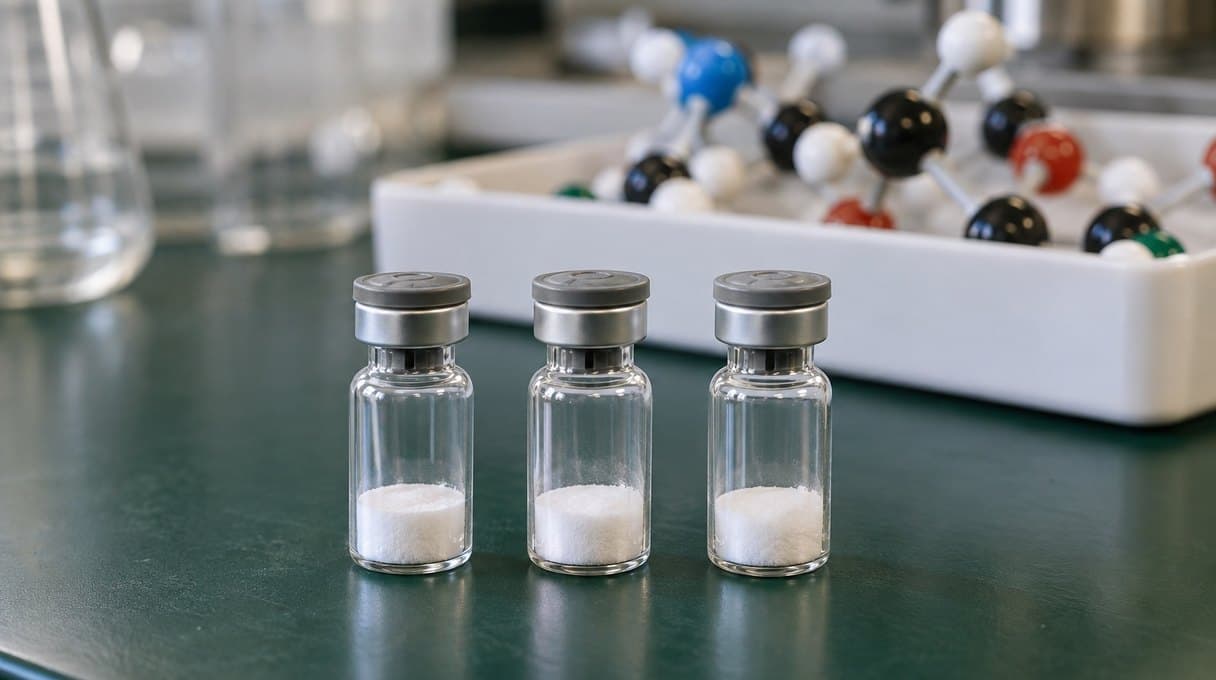
Homegrown supplies LY3437943 as a lyophilized powder intended for exactly this kind of receptor-pharmacology and signaling bench work. Lot-specific specifications and the current certificate of analysis are posted on the LY3437943 product page.
Frequently asked questions
Is LY3437943 the first peptide engineered to hit more than one incretin-family receptor?
No. Dual GIP/GLP-1 receptor agonists preceded it, including LY3298176, whose discovery pharmacology was published by the same lead author group (Coskun et al., 2018). LY3437943's distinguishing feature in that lineage is the addition of glucagon receptor activity as a third engineered arm.
Why do GLP-1, GIP and glucagon receptors share enough structure for one peptide to bind all three?
They are all class B1 G-protein-coupled receptors with a related two-domain binding mechanism, and their native peptide ligands belong to the same broader hormone family. That structural relatedness is what makes a single engineered backbone technically feasible, even though native GLP-1, GIP and glucagon do not meaningfully cross-activate each other's receptors on their own.
Does activating the glucagon receptor always raise blood glucose in these models?
Glucagon receptor activation alone does raise hepatic glucose output in classic pharmacology. In the triple-agonist literature, that effect is described as offset by the simultaneous GLP-1 and GIP receptor activity in the same molecule, which is the specific combination researchers are studying rather than glucagon signaling in isolation.
What model systems have published LY3437943 pharmacology papers used?
The discovery paper by Coskun and colleagues covers recombinant receptor assays, rodent metabolic models and non-human primate studies before moving to early-phase human pharmacology (Coskun et al., 2022). Later papers, such as the gastric emptying study, add specific human pharmacology endpoints (Urva et al., 2023).
Is receptor potency the same thing as physiological effect size?
No. Potency (an EC50 or similar value from a binding or signaling assay) describes how much ligand is needed to activate a receptor in a defined system. Physiological effect size depends on additional factors, including receptor density in the relevant tissue and downstream signal amplification, which is why researchers pair in vitro potency data with whole-animal or clinical endpoints rather than treating one as a stand-in for the other.
References
- Coskun T, Urva S, Roell WC, et al. LY3437943, a novel triple glucagon, GIP, and GLP-1 receptor agonist for glycemic control and weight loss: From discovery to clinical proof of concept. Cell Metab. 2022;34(9):1234-1247.e9. PubMed 35985340.
- Capozzi ME, DiMarchi RD, Tschöp MH, et al. Targeting the Incretin/Glucagon System With Triagonists to Treat Diabetes. Endocr Rev. 2018;39(5):719-738. PubMed 29905825.
- Mayendraraj A, Rosenkilde MM, Gasbjerg LS. GLP-1 and GIP receptor signaling in beta cells: A review of receptor interactions and co-stimulation. Peptides. 2022;151:170749. PubMed 35065096.
- Knerr PJ, Mowery SA, Douros JD, et al. Next generation GLP-1/GIP/glucagon triple agonists normalize body weight in obese mice. Mol Metab. 2022;63:101533. PubMed 35809773.
- Urva S, O'Farrell L, Du Y, et al. The novel GIP, GLP-1 and glucagon receptor agonist LY3437943 delays gastric emptying. Diabetes Obes Metab. 2023;25(9):2784-2788. PubMed 37311727.
- Coskun T, Sloop KW, Loghin C, et al. LY3298176, a novel dual GIP and GLP-1 receptor agonist for the treatment of type 2 diabetes mellitus: From discovery to clinical proof of concept. Mol Metab. 2018;18:3-14. PubMed 30473097.
Research use only. Homegrown Peptides products are for laboratory research and are not for human or animal use. Nothing in this article is medical advice.