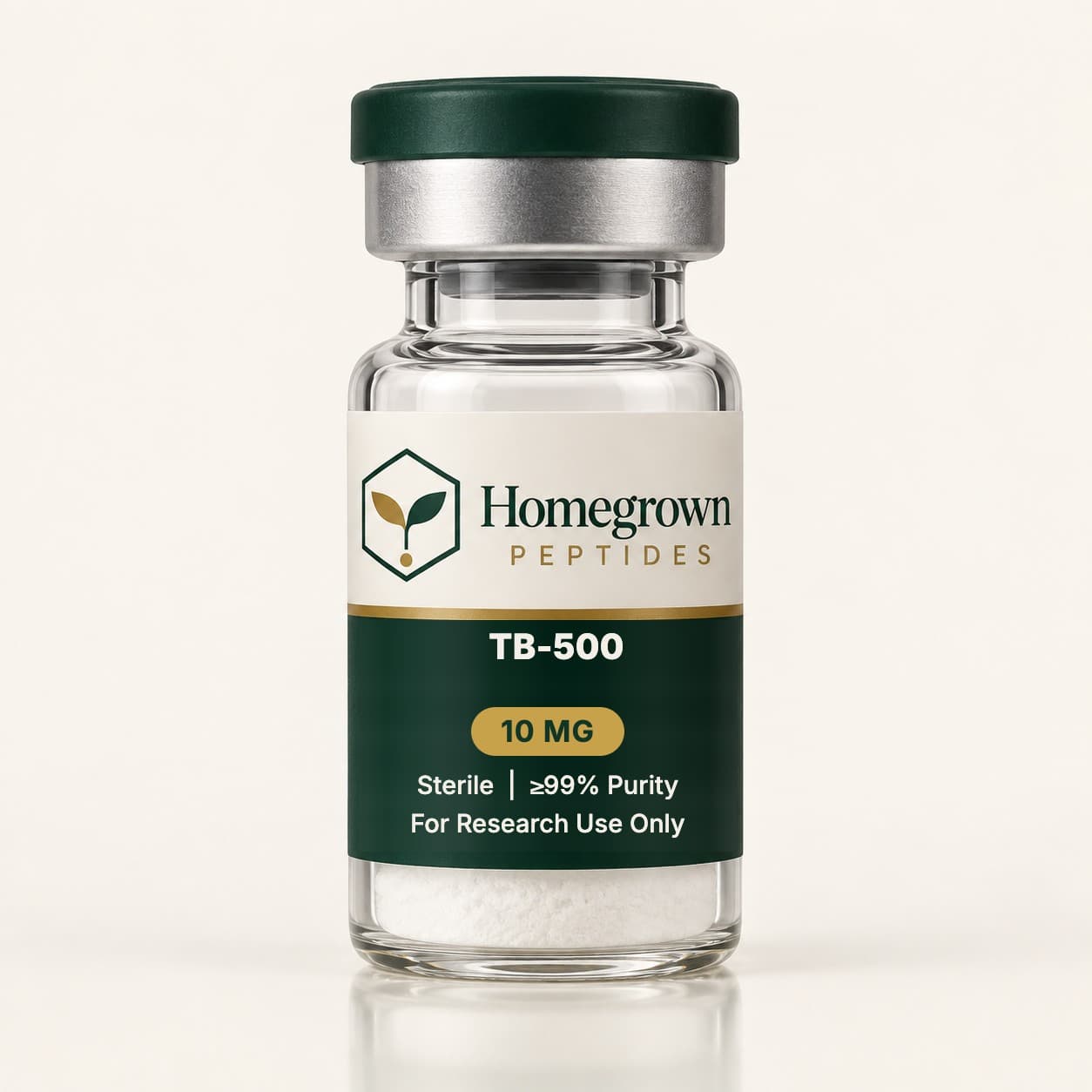
TB-500
Third-Party Tested · Certificate on File- Lot-matched certificate of analysis, identity and purity by HPLC and mass spec
- Ships within 1 business day from the U.S., tracked, in protective packaging
- Research use only. Not for human or animal use
- Ships within 1 business day, tracked, protective packaging
- 2-Day $12.99, free at $1,000 and over
- Overnight $250
- Certificate of analysis available on request
- ≥99% purity specification, HPLC & mass-spec verified at source
- Ships from a U.S. facility within 1 business day
- Secure card checkout on our payment partner's page, 20% already in the total
Complete your setup
Lyophilized peptides need bacteriostatic water and sterile lab supplies to reconstitute. Add the essentials in one click.
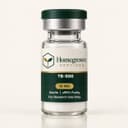 TB-500In your order
TB-500 is a synthetic seven-residue fragment, Ac-Leu-Lys-Lys-Thr-Glu-Thr-Gln-OH, covering residues 17-23 of thymosin beta-4. Published research on the parent molecule in rodent models, including a 2004 paper in Mechanisms of Ageing and Development, examines how thymosin beta-4 promotes angiogenesis, cell migration, and tissue repair processes relevant to this shorter active fragment.
TB-500 is a synthetic peptide based on the active region of thymosin beta-4, a protein involved in actin regulation. It is studied in cell-migration, angiogenesis and tissue-repair models.
Common research applications include:
- Cell migration and actin research
- Wound-healing models
- Cardiovascular repair studies
Specifications
- Class: Thymosin beta-4 fragment
- Form: lyophilized powder in a sealed glass vial
- Available sizes: 10 mg
- Purity: verified at 99% or higher by HPLC, identity confirmed by mass spectrometry
- Testing: every lot is third-party tested, with a lot-matched Certificate of Analysis available on request
- supplied by a U.S. lab
- Storage: keep sealed, cool, dry and away from light; refrigerate after reconstitution
For laboratory research use only. This product is not for human or veterinary use, is not a drug, food or cosmetic, and is not intended to diagnose, treat, cure or prevent any disease.
What the Literature Studies
Philp and colleagues described thymosin beta-4's activity in normal and aged rodents in a 2004 paper in Mechanisms of Ageing and Development, reporting that the molecule promotes new blood vessel formation and tissue repair in both age groups, reversing the reduced angiogenesis typically seen in older animals in that model. The same paper reports that thymosin beta-4 promoted hair growth in normal and aged rodents and attributes these effects to the molecule increasing angiogenesis and cell migration. Because TB-500 corresponds to the actin-binding domain fragment of thymosin beta-4, residues 17-23, research on this shorter sequence builds on the cell-migration mechanism identified for the parent molecule in this and related rodent studies.
Specification and Handling
This lot is a seven-residue fragment with the sequence Ac-Leu-Lys-Lys-Thr-Glu-Thr-Gln-OH, corresponding to thymosin beta-4 residues 17-23, molecular formula C38H68N10O14, and molecular weight 889.02. CAS number is 885340-08-9. Supplied as a lyophilized powder, purity verified at 99% or greater by HPLC, identity confirmed by mass spectrometry, with the certificate of analysis for the lot available on request. The peptide is soluble in bacteriostatic water; consult the COA for solvent specifics for this lot. Sealed vials are stored at -20°C, protected from light and moisture, and reconstituted solution is refrigerated at 2-8°C, split into single-use aliquots where practical to limit freeze-thaw cycles.
Buying Notes
TB-500 ships in a single 10 mg lyophilized vial, a common fill size for this short fragment class of research peptides sold in this catalog's tissue-repair category today. The certificate of analysis for this lot reports HPLC purity and a mass spectrometry match to the 889.02 theoretical mass, confirming the seven-residue fragment sequence for that specific lot and batch. Researchers studying tissue-repair peptide combinations should see /learn/tb-500 for handling detail on this specific lot, and /blog/thymosin-beta-4-vs-tb-500 for how this fragment compares with the full-length parent molecule in the published literature.
Certificate of Analysis & Safety Data
Frequently Asked Questions
How does TB-500 relate to thymosin beta-4?
TB-500 corresponds to residues 17-23 of thymosin beta-4, the region associated with the parent molecule's actin-binding and cell-migration activity. The comparison guide on this site covers how the fragment and full-length molecule are differentiated in the literature.
What rodent findings does the 2004 Philp paper report for thymosin beta-4?
The paper reports that thymosin beta-4 promoted angiogenesis and tissue repair in both normal and aged rodents, reversing the reduced angiogenesis typically seen in older animals. It also reports the molecule promoted hair growth in the same rodent models.
What mechanism does the published research propose for these effects?
The 2004 paper attributes thymosin beta-4's effects to increased angiogenesis and cell migration. TB-500, covering the actin-binding region of the molecule, is studied in relation to this same migration mechanism.
Why is TB-500 often paired with BPC-157 in research combinations?
Both peptides are studied in overlapping tissue-repair research areas, which is why they appear together in several published comparisons and in this catalog's combination products. The linked guide covers how the two are differentiated.
What does the certificate of analysis confirm for a TB-500 lot?
It reports HPLC purity at 99% or greater and a mass spectrometry match to the 889.02 theoretical mass for the C38H68N10O14 formula. This confirms the fragment's identity and purity for the specific lot.
Is TB-500 third-party tested?
Yes. Every lot is tested for identity and purity at the source lab by HPLC and mass spectrometry against a ≥99% purity specification. A certificate of analysis for your lot is available on request.
Can I see the Certificate of Analysis before buying?
Yes. Ask us before you order and we will send the certificate of analysis for the current lot, documenting identity, purity, and analytical results.
What does 'Research Use Only' mean?
This product is supplied strictly for laboratory and research use only (RUO). It is not a drug, food, supplement, or cosmetic, is not approved by the FDA, and is not intended to diagnose, treat, cure, or prevent any disease, or for human or veterinary consumption.
How is it shipped and stored?
Orders ship within 1 business day from our U.S. facility with tracking. Store the lyophilized material at −20°C, protected from light and moisture.
Learn more about TB-500
From the research blog
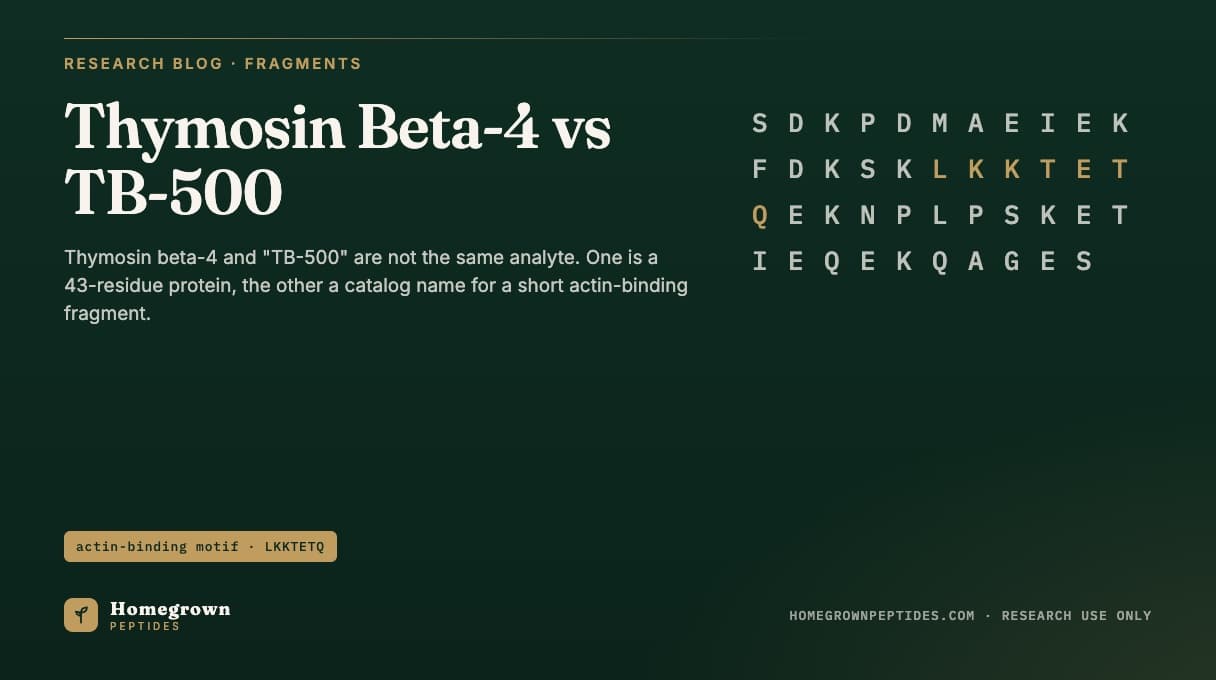
Thymosin Beta-4 vs TB-500: The 43-Residue Protein, the Actin-Binding Fragment and What a Research Vial Actually Contains
Thymosin beta-4 and "TB-500" are not the same analyte. One is a 43-residue protein, the other a catalog name for a short actin-binding fragment.
Read the article →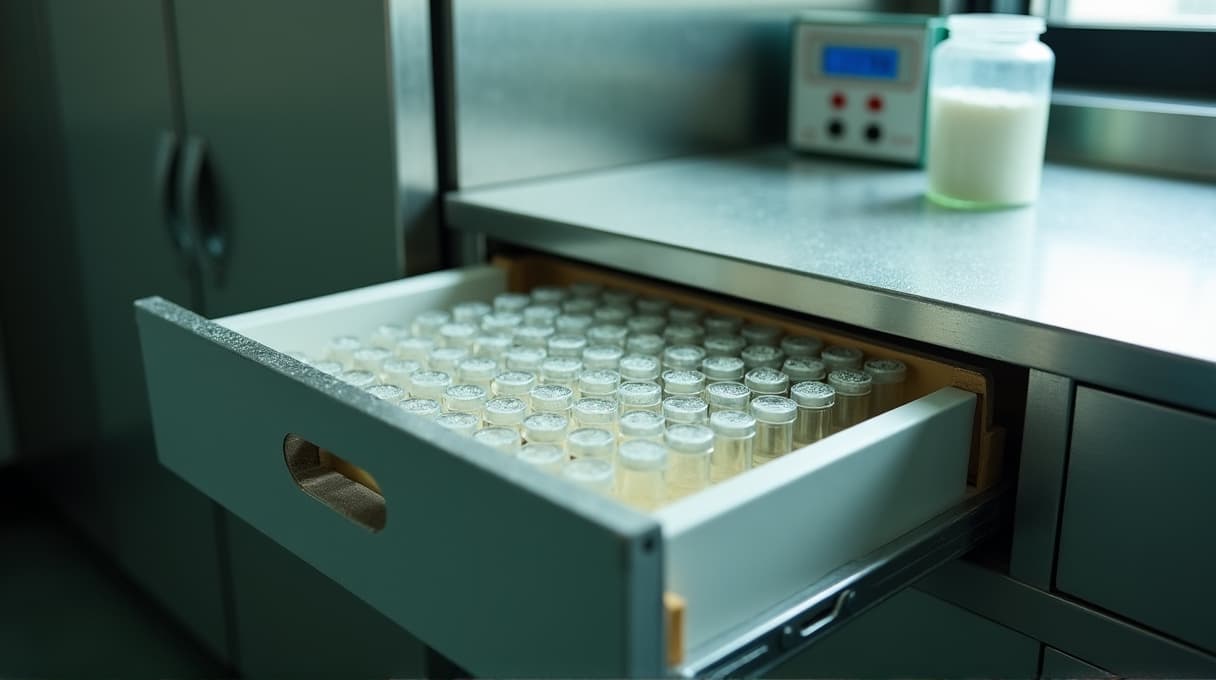
Setting Up a Small-Lab Peptide Storage Station: Freezer, Fridge, Desiccant and Labeling
A lab-operations guide to freezer and fridge zones, desiccant, light control, labeling and temperature logs for a peptide storage station.
Read the article →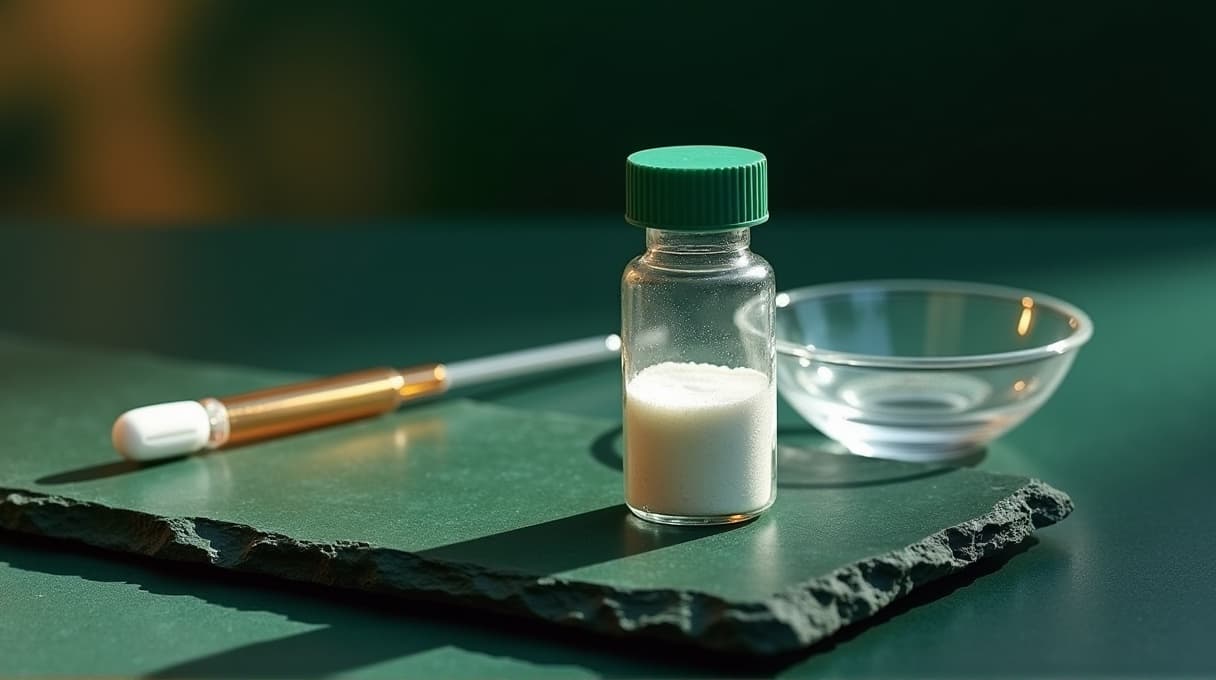
What Is TB-500? The Acetylated Heptapeptide From Thymosin Beta-4
TB-500 is a seven-residue synthetic peptide. Most of the biology cited next to it belongs to a 43-residue protein. Here is how the two relate and what the vial actually contains.
Read the article →