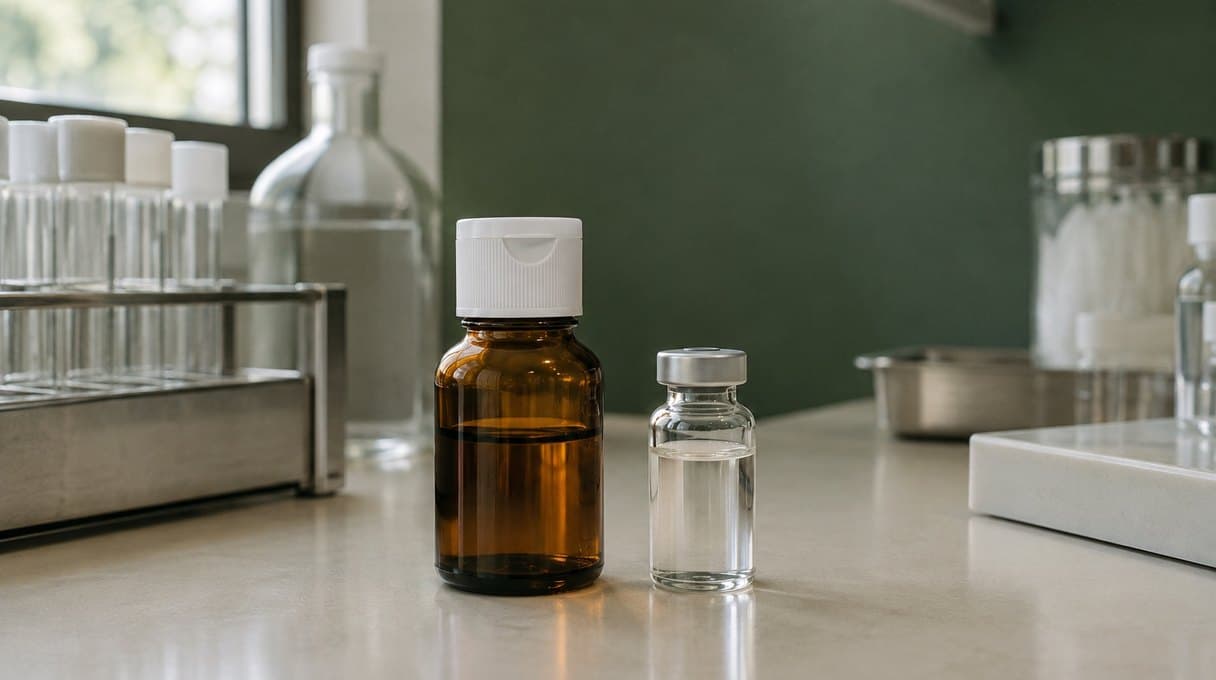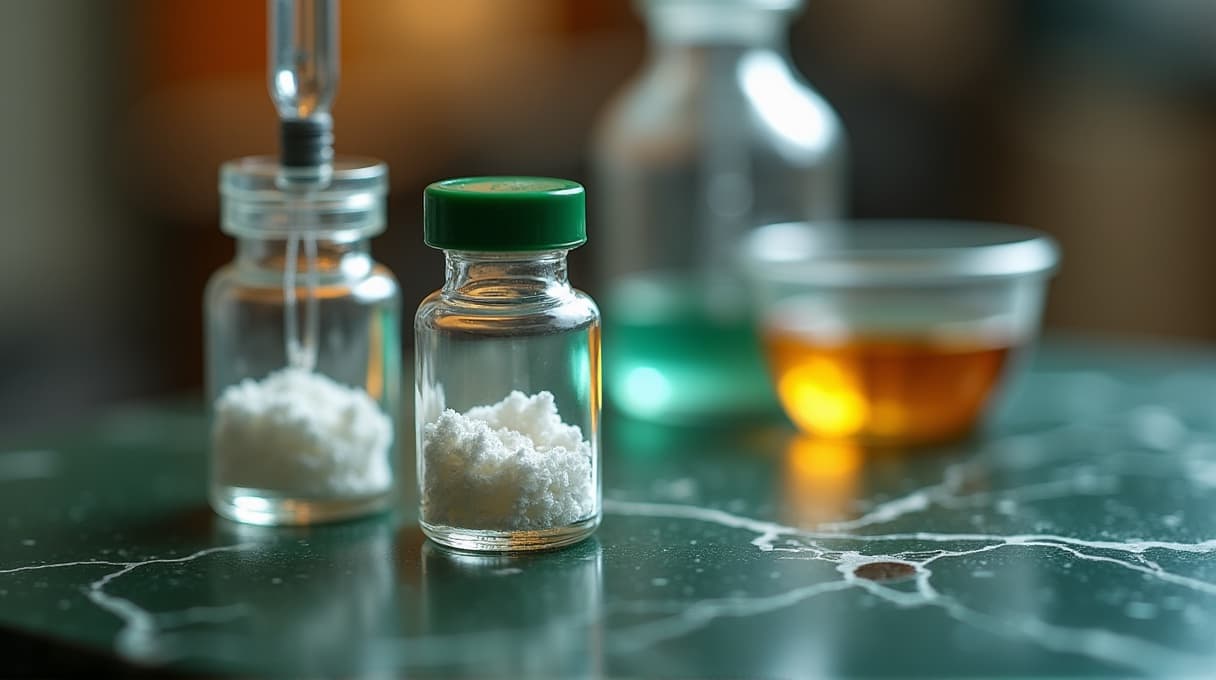
A peptide solution prepared for cell culture, a biochemical assay or other in vitro work can pick up a microbial burden long before anyone notices a problem. "Sterile" and "aseptic" describe different things. Sterility is a state, the near-complete absence of viable microorganisms, achieved by a validated process such as filtration, irradiation or heat. Aseptic technique is a set of handling practices that keep a clean material from picking up new contamination once it leaves its sealed container. This article covers vial sealing, stopper swabbing, laminar flow hoods, when 0.22 micron filtration helps a small sample and when it does not, single-use supplies, and documentation, all describing preparation of a solution for use in cells, tissue or an assay system, not for a person or animal.
| Concept | What it means on the bench |
|---|---|
| Sterile | Validated absence of viable microorganisms, via filtration, autoclaving or gamma irradiation |
| Aseptic technique | Clean surfaces, single-use tools, stopper swabbing and minimal exposure time that limit new contamination |
| Laminar flow hood | Filtered, unidirectional airflow across the work surface, carrying particulates away from an open vial or syringe |
| 0.22 micron filter | A membrane rated to retain organisms such as Brevundimonas diminuta in a validated bacterial challenge |
| PVDF vs PES membrane | Two common low-binding filter materials, differing in peptide adsorption and the filter's hold-up volume |
| Referenced standards | USP <797> and <71>, and ISO 14644 for cleanroom and clean-air classification, cited as reference frameworks |
What do "sterile" and "aseptic" actually mean here?
Sterility is an endpoint a process achieves and a test can check, for example by challenging a filter membrane with a load of a small, hard-to-retain organism such as Brevundimonas diminuta and confirming no passage through the pore structure (Harp et al., 2015). Aseptic technique sits on top of that endpoint: once a lyophilized vial is filled and sealed under sterile conditions, the researcher's job is to open, reconstitute and transfer from it without introducing organisms from hands, air or reused tools. A vial can start sterile and end up contaminated through poor handling alone.
Why are lyophilized vials sealed the way they are?
Research peptides typically ship as a freeze-dried powder under a crimped aluminum collar and a rubber stopper, the single access point into an otherwise closed, sterile container. The elastomer surface reseals cleanly after a needle or filter-tipped syringe passes through it. Because the vial's interior was rendered free of viable organisms at fill and then sealed, every later contamination risk runs from the outside in, through the stopper, the air or whatever tool touches the solution next, which is the rationale for swabbing the stopper before each access and keeping syringes and needles single-use.
How should a stopper be swabbed before a transfer?
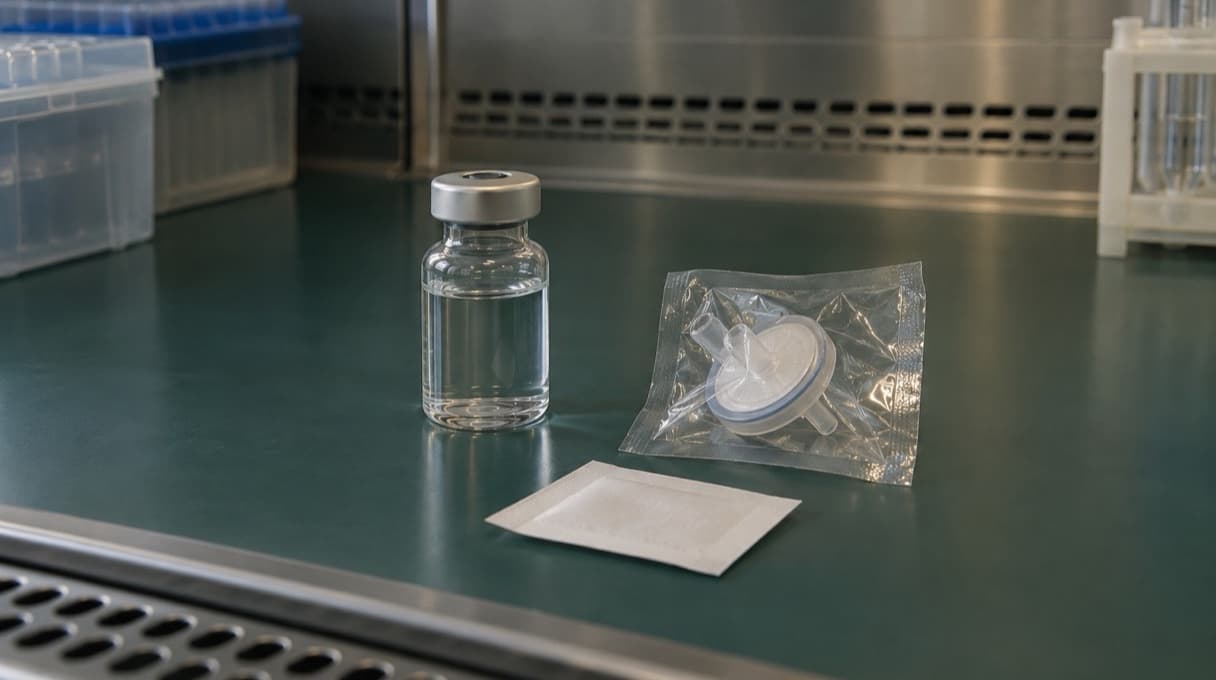
A single-use 70% isopropyl alcohol prep pad applied to the stopper, followed by a brief air-dry interval before the needle or filter tip passes through, is standard bench practice. The air-dry step is most often skipped, but alcohol needs a short contact and evaporation window to work, and piercing a still-wet stopper can carry residual alcohol into the solution instead of leaving it on the surface. A fresh pad for each vial and each access, never one reused across several, keeps this step from becoming a contamination source itself. See our 70% isopropyl alcohol prep pads.
What does a laminar flow hood add to a clean bench?
A laminar flow hood moves HEPA-filtered air in a unidirectional stream across the work surface, carrying airborne particulates and organisms away from an open vial or filter assembly rather than letting them settle. A comparative study of syringe preparation under different bench conditions found that environmental cleanliness and the specific handling steps involved had a measurable, direct effect on the microbial contamination rate of the finished syringe (Stucki et al., 2009). A small lab without a dedicated cleanroom will not match a facility-grade classification, but the same principles scale down: minimize open-air exposure time, decontaminate the work surface, and avoid working directly over an open vial.
When does 0.22 micron filtration make sense for a peptide solution?
A 0.22 micron syringe filter retains bacteria while passing liquid and most small molecules, and it is a reasonable extra step when a reconstituted solution will sit in culture for an extended period or be split across several downstream uses. Validation work on this filter class uses a defined bacterial challenge, most often Brevundimonas diminuta, and examines how flow rate, fluid surface tension and throughput volume affect whether organisms pass through the membrane (Folmsbee, 2015; Wang et al., 2008). Filtration is less useful for very small volumes used right away: every filter has a hold-up volume, liquid retained in the membrane and housing, and for a sub-milliliter solution that loss can outweigh the assurance gained.
PVDF vs PES membranes: what changes for a peptide solution?
Small-volume syringe filters commonly use polyvinylidene fluoride (PVDF) or polyethersulfone (PES) membrane material. The choice affects non-specific binding of peptide to the membrane surface and the volume of liquid the membrane retains. Both are marketed as comparatively low-binding relative to older cellulose membranes, but they are not identical, and membrane chemistry can affect recovery of biological material passed through a filter, as comparative filtration work across membrane types has shown (Mocé-Llivina et al., 2003). Checking a filter's protein-binding and hold-up-volume specs before committing a valuable aliquot is worth the extra minute.
What single-use supplies reduce contamination risk?
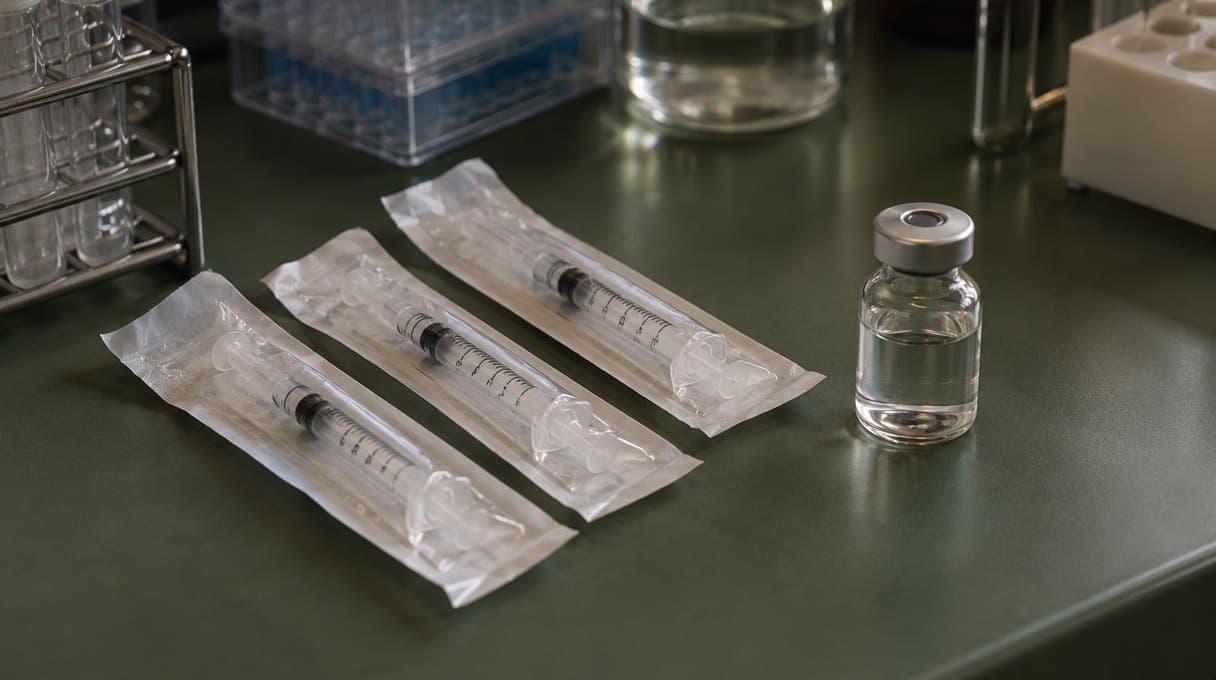
Single-use syringes and needles, discarded rather than reused across vials, guard against carrying organisms or residue from one solution into another. A dedicated syringe for drawing bacteriostatic water, a separate syringe for the reconstituted solution, and a fresh needle whenever a tip touches a non-sterile surface are low-cost habits with an outsized effect on sample integrity. See insulin syringes in the research lab for gauge and dead space, and reconstituting lyophilized peptides for the concentration math behind this step. A reconstitution kit keeps these items matched and on hand.
What standards do labs reference for this work?
Labs that want a documented basis for aseptic and filtration practices generally point to the same frameworks pharmacy and manufacturing settings use, without necessarily seeking formal certification. USP General Chapter <797> addresses sterile compounding and USP <71> addresses sterility testing methodology; ISO 14644 defines cleanroom and clean-air classification by particle count. Citing these standards in a written procedure gives reviewers a known reference point for what a bench practice is approximating.
What should be documented after preparation?
A short, consistent record supports reproducibility and troubleshooting: the lot and certificate-of-analysis reference for the peptide vial, the diluent lot, whether filtration was performed and with what filter, the date and time, and the researcher who performed it. A dated notebook entry or spreadsheet row is enough, but it should exist before the solution goes into an assay, since reconstructing those details after an unexpected result is far harder than logging them at the bench. Pairing this with a clear storage routine, covered in setting up a peptide storage station, closes the loop from vial to freezer.
Frequently asked questions
Is sterile filtration always necessary for a reconstituted peptide solution?
Not always. It is most useful when a solution will be held for an extended period, split across multiple uses, or used in a sensitive culture system. For a small volume used right away under clean conditions, the hold-up volume and possible membrane binding of a 0.22 micron filter can outweigh what the step adds.
Why swab a vial stopper if the vial was already sealed under sterile conditions?
The stopper is the only access point into an otherwise sealed container, and its outer surface is exposed to room air, packaging and handling before it reaches the bench. Swabbing with a 70% isopropyl alcohol prep pad and a brief air-dry interval reduces the chance of carrying surface contamination into the vial when it is pierced.
Does a small lab need a certified cleanroom to practice good aseptic technique?
No. A dedicated laminar flow hood or a clean, minimally trafficked bench area paired with single-use supply habits can meaningfully reduce contamination risk relative to open-bench handling, without formal ISO 14644 classification.
Can single-use syringes and needles be reused across different peptide vials?
Reusing a syringe or needle across vials carries carryover and contamination risk and runs against aseptic technique. A fresh, single-use syringe and needle for each vial is standard practice.
References
- Harp G, Cho SJ, Lester E, Rose D, Sabanyagam C, Ross SF. Microscopic Characterization of Brevundimonas diminuta in the Hydrated State. PDA J Pharm Sci Technol. 2015;69(3):355-365. PubMed 26048743.
- Folmsbee M. Evaluation of the Effect of the Volume Throughput and Maximum Flux of Low-Surface-Tension Fluids on Bacterial Penetration of 0.2 Micron-Rated Filters during Process-Specific Filter Validation Testing. PDA J Pharm Sci Technol. 2015;69(2):307-316. PubMed 25868996.
- Wang Y, Hammes F, Düggelin M, Egli T. Influence of size, shape, and flexibility on bacterial passage through micropore membrane filters. Environ Sci Technol. 2008;42(17):6749-6754. PubMed 18800559.
- Mocé-Llivina L, Jofre J, Muniesa M. Comparison of polyvinylidene fluoride and polyether sulfone membranes in filtering viral suspensions. J Virol Methods. 2003;109(1):99-101. PubMed 12668275.
- Stucki C, Sautter AM, Favet J, Bonnabry P. Microbial contamination of syringes during preparation: the direct influence of environmental cleanliness and risk manipulations on end-product quality. Am J Health Syst Pharm. 2009;66(22):2032-2036. PubMed 19890087.
- Sigward E, Fourgeaud M, Vazquez R, et al. Aseptic simulation test challenged with microorganisms for validation of pharmacy operators. Am J Health Syst Pharm. 2012;69(14):1218-1224. PubMed 22761076.
Research use only. Homegrown Peptides products are for laboratory research and are not for human or animal use. Nothing in this article is medical advice.