CJC-1295 without DAC, also written modified GRF(1-29), is a GHRH-receptor pathway analog. GHRP-6 is a ghrelin-receptor pathway hexapeptide first described decades before the ghrelin receptor itself was cloned. Labs pair the two for the reason covered in why studies pair a GHRH analog with a ghrelin mimetic: two separate receptors on the pituitary somatotroph, engaged at once. The difference here is the ghrelin-pathway half. GHRP-6 is an older, less selective compound than ipamorelin, with its own published signal for appetite and secondary pituitary hormone release, covered below alongside the modification distinguishing CJC-1295 without DAC from the DAC-conjugated version.
| Attribute | Detail |
|---|---|
| CJC-1295 (no DAC) | A tetrasubstituted analog of GHRH(1-29), also called modified GRF(1-29), studied for extended GHRH-receptor engagement without the DAC albumin-binding chemistry |
| GHRP-6 | The synthetic hexapeptide His-D-Trp-Ala-Trp-D-Phe-Lys-NH2, an early ghrelin-receptor agonist studied since the early 1980s |
| Receptor pathway 1 | GHRH receptor on pituitary somatotrophs, engaged by the modified GRF(1-29) backbone |
| Receptor pathway 2 | Ghrelin receptor, GHS-R1a, engaged by GHRP-6 |
| What combination research examines | Whether stimulating both receptors together produces a larger growth hormone pulse than either pathway alone, in pituitary cell and animal models |
| Key difference from CJC-1295 + ipamorelin | GHRP-6 is less receptor-selective than ipamorelin, with reported effects on appetite, cortisol, and prolactin alongside growth hormone |
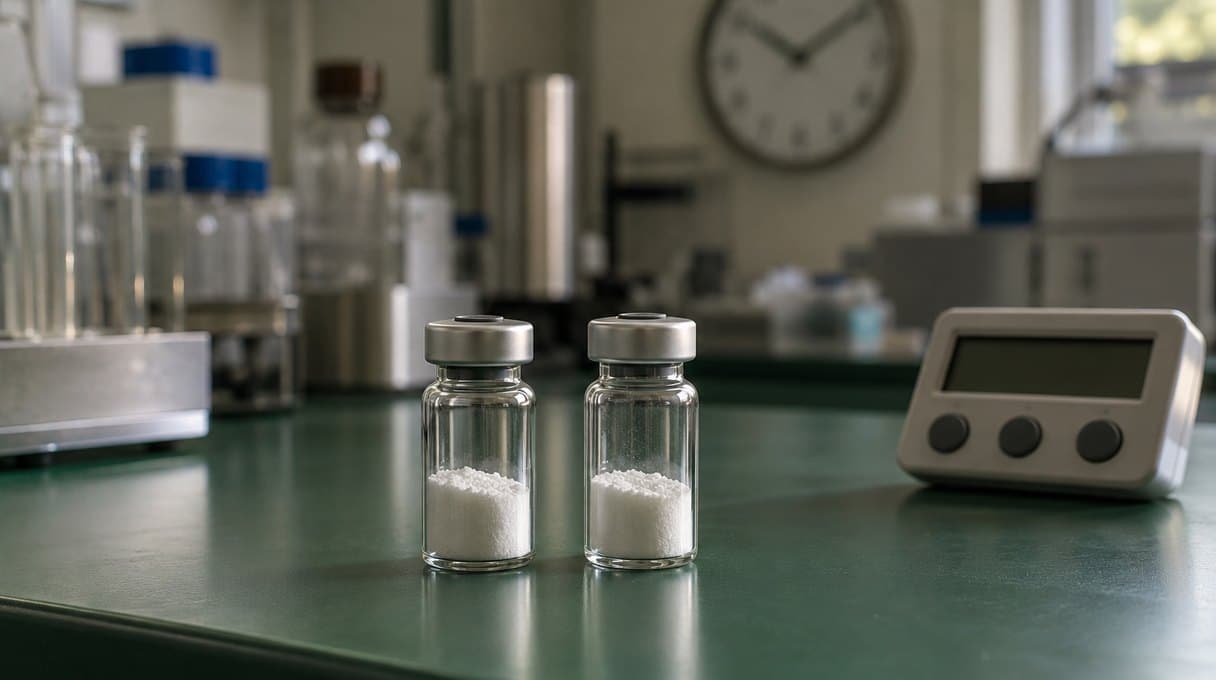
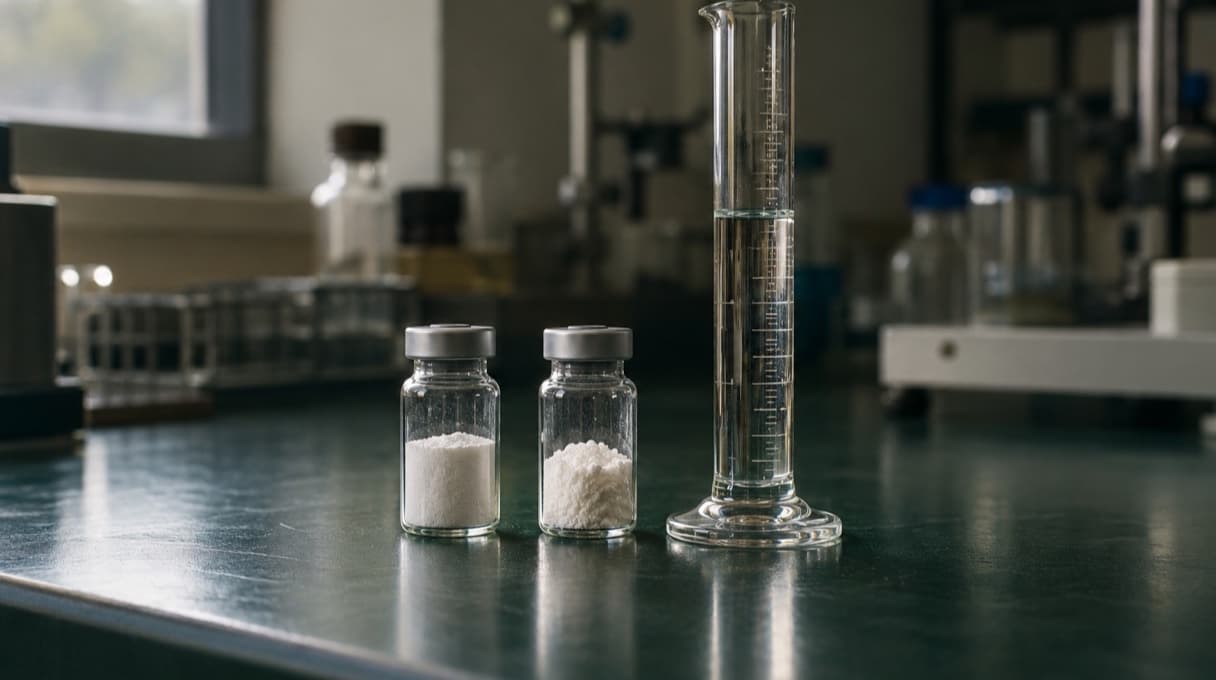
| Form supplied | Lyophilized powder, two peptides in one vial, research use only |
What is CJC-1295 without the drug affinity complex?
Growth hormone-releasing hormone is a hypothalamic peptide whose first 29 amino acids, GRF(1-29), carry the activity needed to engage the GHRH receptor on pituitary somatotrophs. That sequence was isolated and characterized from human tissue in the early 1980s, establishing the receptor pathway every subsequent GHRH analog is designed around (Ling et al., 1984). Native GRF(1-29) clears from circulation quickly, limiting its usefulness as a stable research tool. CJC-1295 modifies the backbone at several positions, a tetrasubstituted change intended to resist the enzymes that normally break the peptide down, extending how long the molecule engages the receptor in an assay. The version covered in CJC-1295 with DAC vs without DAC adds a separate chemical handle, the drug affinity complex, that binds circulating albumin and stretches the engagement window much further. The no-DAC version used in this blend is the tetrasubstituted GRF(1-29) analog on its own, without that albumin-binding addition. Human pharmacology work on the DAC-conjugated analog reported a sustained rise in growth hormone and insulin-like growth factor I over a multi-day window, attributed to the extended pharmacokinetic profile the DAC chemistry provides (Teichman et al., 2006); the no-DAC backbone here is the same modified sequence without that addition.
What is GHRP-6, and which receptor does it engage?
GHRP-6 is the synthetic hexapeptide His-D-Trp-Ala-Trp-D-Phe-Lys-NH2, developed well before its receptor target was identified. Early structure-activity work screened small peptides for the ability to release growth hormone from cultured pituitary cells, and GHRP-6 emerged as one of the most potent candidates (Momany et al., 1981). A following study characterized the hexapeptide specifically, reporting growth hormone release in cultured rat pituitary cells and in live animals through a mechanism distinct from the GHRH receptor pathway (Bowers et al., 1984). The receptor it acted on was not cloned until more than a decade later, when researchers identified a G protein-coupled receptor in the pituitary and hypothalamus later named the ghrelin receptor, GHS-R1a (Howard et al., 1996), confirming GHRP-6 and GHRH act on two separate receptors that converge on the same growth hormone pulse. See what is GHRP-6 for more on this blend's companion compound.
Why do studies combine a GHRH analog with a ghrelin mimetic?
The GHRH receptor and the ghrelin receptor sit on the same pituitary somatotroph but activate different intracellular signaling cascades, the GHRH receptor largely through cyclic AMP, the ghrelin receptor through calcium and phospholipase-linked signaling (Howard et al., 1996). Because the two pathways are not simply redundant, researchers have examined whether engaging both at once produces a larger growth hormone pulse than either agonist alone. In one of the earliest human studies to test this, submaximal amounts of GHRP given alongside GHRH stimulated growth hormone release synergistically, evidence the two peptides act independently rather than competing for the same limited pituitary output (Bowers et al., 1990). That same study also showed GHRP-6's broader profile: prolactin and cortisol both rose above baseline at the higher amounts tested, a pattern not generally seen with GHRH alone. This two-receptor, additive-pulse rationale is the same logic behind pairing CJC-1295 with ipamorelin, covered in that article; the receptor pharmacology is shared, only the ghrelin-pathway agonist changes.
How does GHRP-6 differ from ipamorelin, and what has this pairing been studied for?
Ipamorelin was developed specifically to narrow the ghrelin-receptor pharmacology down to growth hormone release with comparatively little effect on other pituitary hormones. GHRP-6 predates that selectivity work and has a broader published signal. Beyond the cortisol and prolactin increases noted in early human pharmacology (Bowers et al., 1990), GHRP-6 given directly into the brain ventricles of rats produced a clear increase in food intake not accompanied by a change in circulating growth hormone, indicating the orexigenic signal and the growth hormone-releasing signal can be experimentally separated in that model (Locke et al., 1995). None of this makes GHRP-6 a stronger or weaker secretagogue than ipamorelin; a study using it as the ghrelin-pathway half of a combination is working with a less receptor-selective tool, and readouts are more likely to include appetite, prolactin, or cortisol measures alongside growth hormone. Most of the controlled pharmacology behind this blend still comes from studies of a GHRH-pathway analog or a ghrelin-pathway agonist on its own, rather than trials combining a modified GRF(1-29) backbone with GHRP-6 specifically; that combined-administration gap mirrors the one noted for CJC-1295 and ipamorelin. Cell and animal work built around this pairing generally follows the same two-arm comparison model used elsewhere in secretagogue research, with growth hormone pulse amplitude, timing, and secondary markers such as cortisol or prolactin recorded across GHRH-only, ghrelin-only, and combined conditions.
What does lab handling look like for a two-peptide vial?
A vial containing both a modified GRF(1-29) backbone and GHRP-6 means two peptide masses are reconstituted into one solution. Working out the resulting concentration of each component is bench arithmetic rather than a single-peptide calculation; the method is covered in calculating concentrations for two-peptide blend vials and not repeated here. Store the vial per the certificate of analysis and confirm identity and purity from the lot-specific documentation before use in an assay. Lot-specific specs for this blend are posted on our CJC-1295 (no DAC) and GHRP-6 lot page.
Frequently asked questions
Is GHRP-6 the same as ipamorelin?
No. Both engage the ghrelin receptor, GHS-R1a, but ipamorelin was developed for greater receptor selectivity. GHRP-6 is an earlier compound with a broader published pharmacology that includes effects on cortisol, prolactin, and appetite in addition to growth hormone release.
Does GHRP-6 affect hormones besides growth hormone in the literature?
Published human pharmacology has reported increases in cortisol and prolactin alongside growth hormone at higher amounts of GHRP-6, and separate rodent work has reported an increase in food intake following direct intracerebroventricular administration. These are findings from the cited studies, not predictions about any individual response.
What does "no DAC" mean for CJC-1295?
DAC refers to the drug affinity complex, a chemical addition that binds circulating albumin and extends how long a GHRH analog engages its receptor. The no-DAC version is the tetrasubstituted modified GRF(1-29) backbone without that addition.
Has the CJC-1295 no DAC plus GHRP-6 combination itself been studied directly?
Controlled studies combining this exact pairing are limited compared with the separate literature on each component. The rationale rests on the distinct receptor pharmacology of the GHRH receptor and the ghrelin receptor rather than a large combined dataset.
Is any of this research done in humans?
Some of the cited GHRP-6 and GHRH pharmacology was conducted in healthy human subjects; the appetite work was conducted in rats. This article summarizes published research findings and is not guidance for use in any subject.
How is this blend supplied?
As a lyophilized powder containing both peptides in one vial, intended for research use only, sold by lot with an accompanying certificate of analysis.
References
- Momany FA, Bowers CY, Reynolds GA, Chang D, Hong A, Newlander K. Design, synthesis, and biological activity of peptides which release growth hormone in vitro. Endocrinology. 1981;108(1):31-9. PubMed 6109621.
- Bowers CY, Momany FA, Reynolds GA, Hong A. On the in vitro and in vivo activity of a new synthetic hexapeptide that acts on the pituitary to specifically release growth hormone. Endocrinology. 1984;114(5):1537-45. PubMed 6714155.
- Ling N, Esch F, Bohlen P, Brazeau P, Wehrenberg WB, Guillemin R. Isolation, primary structure, and synthesis of human hypothalamic somatocrinin: growth hormone-releasing factor. Proc Natl Acad Sci U S A. 1984;81(14):4302-6. PubMed 6431406.
- Howard AD, Feighner SD, Cully DF, et al. A receptor in pituitary and hypothalamus that functions in growth hormone release. Science. 1996;273(5277):974-7. PubMed 8688086.
- Bowers CY, Reynolds GA, Durham D, Barrera CM, Pezzoli SS, Thorner MO. Growth hormone (GH)-releasing peptide stimulates GH release in normal men and acts synergistically with GH-releasing hormone. J Clin Endocrinol Metab. 1990;70(4):975-82. PubMed 2108187.
- Locke W, Kirgis HD, Bowers CY, Abdoh AA. Intracerebroventricular growth-hormone-releasing peptide-6 stimulates eating without affecting plasma growth hormone responses in rats. Life Sci. 1995;56(16):1347-52. PubMed 8614257.
- Teichman SL, Neale A, Lawrence B, Gagnon C, Castaigne JP, Frohman LA. Prolonged stimulation of growth hormone (GH) and insulin-like growth factor I secretion by CJC-1295, a long-acting analog of GH-releasing hormone, in healthy adults. J Clin Endocrinol Metab. 2006;91(3):799-805. PubMed 16352683.
Research use only. Homegrown Peptides products are for laboratory research and are not for human or animal use. Nothing in this article is medical advice.